We develop synthetic lethal (SL) strategies that target vulnerabilities created by MYC-driven cancer states.
Why MYC-Driven Cancers Are Hard to Treat
MYC is a central driver of cancer aggressiveness, treatment resistance, and immune evasion. Abnormal MYC activity is implicated in up to 70% of human cancers.
Despite its importance, MYC has long been considered pharmaceutically undruggable. While MYC activity can be inhibited in experimental settings, no direct or indirect approach has translated into meaningful clinical benefit.
Our Approach: MYC-Synthetic Lethality
Rather than attempting to inhibit MYC directly, we target the critical dependencies that MYC-driven cancers require to survive.
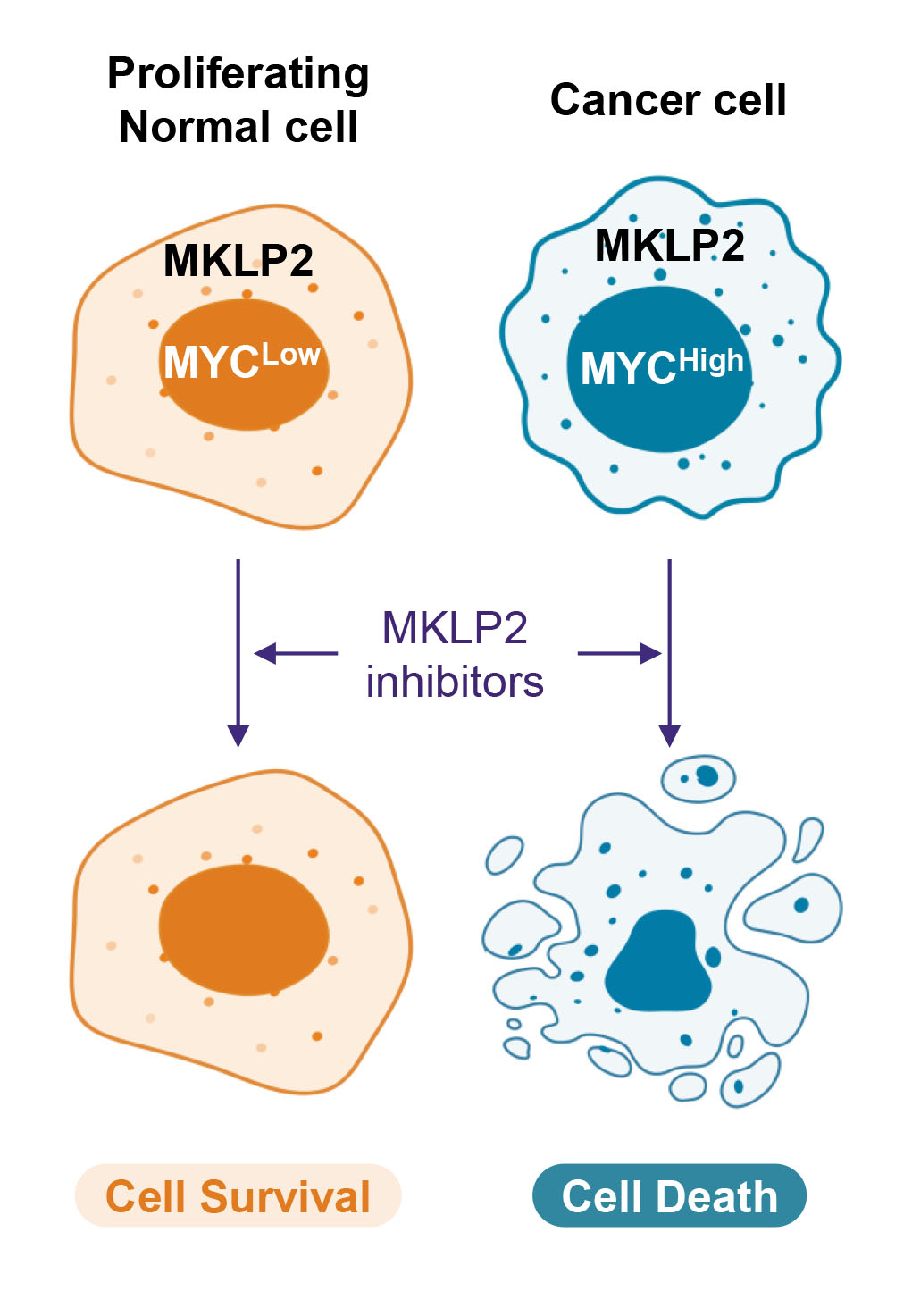
When MYC is highly active, cancer cells are pushed into an extreme, high-demand state and become reliant on components that normal cells do not depend on. This strategy is known as MYC-synthetic lethality (MYC-SL).
MKLP2: A MYC-Created Vulnerability
Through our research, we identified MKLP2 as a critical dependency in MYC-driven cancers.
In MYC-high tumors, MKLP2 becomes a load-bearing bottleneck—a component that cancer cells cannot function without once MYC drives them into an aggressive, high-demand state. Normal cells, which do not operate under these extreme conditions, are far less dependent on MKLP2.
Building a Scalable MYC-SL Pipeline
Based on this insight, we are advancing a pipeline of MYC-SL therapies toward clinical development for patients with MYC-driven cancers.